
The Bronze Statue of Zhou Dynasty's Respectful Posture

The Bronze Statue of Zhou Dynasty's Respectful Posture

This small and delicate figure stood with outstretched arms in a respectful posture. His curled fingers formed a socket that could grip the handle of the oil lamp. The character is wearing a long waistcoat with a regular waistband fixed by a belt hook around their waist. Throughout the entire Shang and Western Zhou dynasties (1600-771 BC), bronze figures were rare, but now several bronze figures have been unearthed from tombs of the Warring States period in the late Zhou dynasty as lamp posts. The strong sculptural quality of this character foreshadows the naturalism encountered in the subsequent Qin (221-206 BC) and Western Han (206-25 BC) eras.
Bronze Dragon Statue in Hue Royal City, Vietnam

Bronze Dragon Statue in Hue Royal City, Vietnam

The dragon of the inner city of Hue, Vietnam The bronze dragon was cast in 1842 and is located in front of the Yueshi Hall in Da Nei Fu, Hue City, Vietnam. The bronze dragon was cast in front of the Shunhua Imperial City in 1842.
18th century Chinese gold-plated bronze statue of Bodhisattva

18th century Chinese gold-plated bronze statue of Bodhisattva

Guan Yu on horseback

Guan Yu on horseback

This is a 16th century artwork, currently housed in the Minneapolis Museum of Art in the United States. The statue is made of gold-plated bronze and measures 51.4 x 41.9 x 18.7 centimeters. Guan Yu (? -220 AD), also known as Yunchang and Changsheng, also known as Meiran Gong, Guan Gong, Wusheng, and Zhuangmu Hou, was born in Jiexian County, Hedong Commandery (now Jiezhou Town, Yanhu District, Yuncheng City, Shanxi Province). A famous general in the late Eastern Han Dynasty.
Chinese style classical art bronze chicken statue

Chinese style classical art bronze chicken statue

Half body portrait of Mark Twain

Half body portrait of Mark Twain

This bust of Mark Twain is located at the Hermitage Museum and Sculpture Garden in Santa Barbara, California. This is a bronze, life size bust created by artist HermiTed. Mark Twain (November 30, 1835- April 21, 1910), originally named Samuel Langhorne Clemens, was an American humorist, novelist, writer, and renowned orator.
The bronze statue of "Bronze Moses" at Augustana University

The bronze statue of "Bronze Moses" at Augustana University

The 'Bronze Moses' at Augustana University is a full-size bronze replica of Michelangelo's' Moses' statue created by Felix de Verden. This work was donated by Fenwick, a Cleveland industrialist and former resident of Sioux Falls, in 1974. It was originally completed around 1964 and was exhibited at the Cleveland Museum in Fenwick. This statue is currently located on the campus of Augustana University.
Bronze Statue Garrison - Black Jade Statue of Emperor Guan Gong

Bronze Statue Garrison - Black Jade Statue of Emperor Guan Gong

Guan Yu (160-220 AD), also known as Yunchang and Changsheng, was born in Jiexian County, Hedong Commandery (now Jiezhou Town, Yanhu District, Yuncheng City, Shanxi Province). A famous general in the late Eastern Han Dynasty. Guan Yu treated soldiers well and despised literati, and was known for his loyalty and righteousness in later generations. After his death, he was revered as "Guan Gong" by the people and was often honored by the imperial courts throughout history. During the reign of Emperor Yongzheng of the Qing Dynasty, he was revered as the "Martial Saint" and held the same status as Confucius, the "Literary Saint". In the novel 'Romance of the Three Kingdoms', he is ranked first among the' Five Tiger Generals'. In the regions of Hong Kong, Macau, Taiwan, and some Southeast Asian countries, almost every household worships the statue of Guan Gong, who is worshipped by Confucius in literature and Guan Gong in martial arts.
Bronze Statue of Korsabad's Bronze Lion from the Neo Assyrian Period

Bronze Statue of Korsabad's Bronze Lion from the Neo Assyrian Period

This artifact is exhibited in the Oriental Antiques Department of the Louvre Museum in France. The statue is made of bronze. It is a lion statue in a lying position, with its mouth open to display its teeth. The lion's fur and facial details are carefully carved, displaying its vivid and realistic appearance. There is a circular handle above the statue, which may be used to carry or hang this item. The place where the statue was made was Korsabad, an important city in ancient Assyria located in northern Iraq today. The Neo Assyrian period was an important stage in Assyrian history, during which the Assyrian Empire reached its maximum territory.
Bronze statue of a praying woman from the Hellenistic period in Etruria

Bronze statue of a praying woman from the Hellenistic period in Etruria

This statue was made in the 2nd century BC, named "Bronze Prayer of Young Women Statue", belonging to the Hellenistic period of Etruria in Italy. The statue is the image of a young woman, possibly a priestess, with a height of 95 centimeters. The surface decoration of the statue is rich, including fine carving details on hair, jewelry, sewn seams, decorative edges, and shawl folds. Her shoes have exquisite shoelaces and floral decorations, which are typical Etruscan style. The left foot of the statue is a modern restoration. The statue is currently on display at the British Museum in London.
The bronze statue of the Casagrande civilization, 'Pachime Rattlesnake Turtle'

The bronze statue of the Casagrande civilization, 'Pachime Rattlesnake Turtle'

The name of the cultural relic is Pachime Rattlesnake Turtle, which is made of copper and was made in Pachime, Chihuahua, Mexico. This place is the political center of the Casagrande civilization, which is one of the most prominent and complex cultures in northern Mexico and southwestern United States. The production period of this cultural relic was around 1200 AD. This period was the peak of the Casagrande culture, which had a widespread influence in northern Mexico and southwestern United States. The statue is made by the lost wax method, which requires the destruction of the mold, so there are no two identical works. The statue is now part of the collection of the National Museum of Anthropology in Mexico.
Bronze statue from the Sultanate of Delhi, India, depicting the Buddha's achievement without impurities

Bronze statue from the Sultanate of Delhi, India, depicting the Buddha's achievement without impurities

This statue, named the Pure Accomplishment Buddha, is one of the Five Wisdom Tathagatas in Tibetan Buddhism. It is related to the achievements of the Buddhist path and the destruction of poison. His name means' pure achievement '. His spouse is Tara, meaning the one who liberates, and his mount is Garuda. He belongs to the business family, whose family emblem is the Double Diamond Rod. This statue is made of copper and is currently housed in the Minneapolis Museum of Art in the United States. It was made in the 13th century AD, between 1200 and 1300 AD. This statue is a representative work of Tibetan Buddhist art, showcasing the artistic style and techniques of that period.
Bronze elephant statue, a folk handicraft in Uttar Pradesh, India
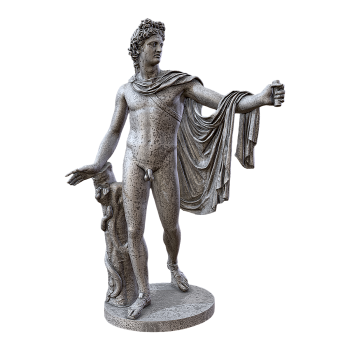
Bronze elephant statue, a folk handicraft in Uttar Pradesh, India

In India, elephants play an important role in both art and religion. In traditional Indian art, elephants are often used as themes and carved into various forms of statues, including deities, decorations, and memorabilia. In Hinduism, elephants are regarded as auspicious symbols, and the elephant headed god Ganesh is one of the important deities in Hinduism. In the northern region of India, folk people are skilled in using various materials such as wood, stone, metal, etc. to create animal statues, especially elephant statues.
The bronze statue of Apollo, the Sagittarius, from the ancient Roman period
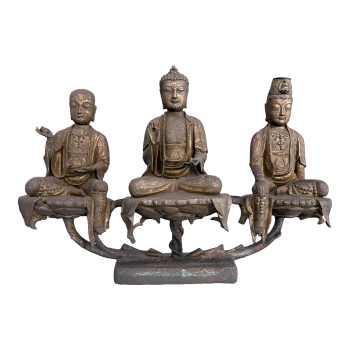
The bronze statue of Apollo, the Sagittarius, from the ancient Roman period

This statue is part of the collection of Cardinal Giuliano della Rovere in the Roman palace. When he was elected as Pope Julius II (1503-1513), these statues were transferred to the Vatican and have been preserved there since at least 1508, now housed in the Vatican Museums. Apollo walked forward with great majesty, as if he had just released an arrow from the bow in his left hand. The date for this work has been determined to be mid February AD century and is believed to be a replica of the original bronze statue dating back to 330-320 BC.
Bronze statue of the Joseon Dynasty "Three Amitabha"

Bronze statue of the Joseon Dynasty "Three Amitabha"

This relic is a bronze statue named Amitabha Three, made in 1400 AD. This statue is from the South Korea of the Joseon Dynasty (AD 1392-1910). This statue is made of bronze material with traces of gilding. The overall dimensions of this statue are 40.6 x 16.5 x 54.6cm. Among them, Amitabha Buddha sits in the center of the lotus seat. On his left and right sides are two waiters: Ksitigarbha Bodhisattva and Guanyin Bodhisattva. The combination of these three was popular in the early Korean period. This statue is now in the collection of the Cleveland Museum of Art.
Minneapolis Art Gallery Collection 12th Century Bronze Statue of Shiva Nataraja, India

Minneapolis Art Gallery Collection 12th Century Bronze Statue of Shiva Nataraja, India

The Hindu god Shiva appears in several incarnations. Here, Shiva appears as the king of the dance. He raised his left foot in an elegant dancing pose. In his upper right hand, Nataraja holds a drum, the sound of which embodies creation. The flame he held in his upper left hand symbolized destruction. Together they symbolize the creation and destruction of the universe. The gestures of the lower left and lower right palms of the icon indicate protection. The foot resting on the demon's back symbolizes the elimination of ignorance, while the raised left foot symbolizes salvation. A now-missing ring of fire, symbolizing the simultaneous and continuing creation and destruction of the universe, will surround the bronze icon.
Mohandas Karamchand Gandhi, Parliament Square, London

Mohandas Karamchand Gandhi, Parliament Square, London

The statue is funded by public donations and sponsors, supported by the Gandhi Statue Memorial Trust and a special advisory group set up by the government. The statue is 9 feet (about 2.7 meters) high and is made of bronze. Based on a 1931 photograph of Gandhi standing outside the office of Prime Minister Ramsay MacDonald. The base of the statue is lower than that of other statues in Parliament Square, a deliberate choice by the Gandhi Statue Memorial Trust to embody Gandhi's spirit of humility and equality. The statue, designed by Ian Walters, was unveiled in 2014 to mark the 150 anniversary of Gandhi's birth.
Italian Art Deco Bronze Art Deer Statue

Italian Art Deco Bronze Art Deer Statue

Bronze statue of LaOCon and his sons
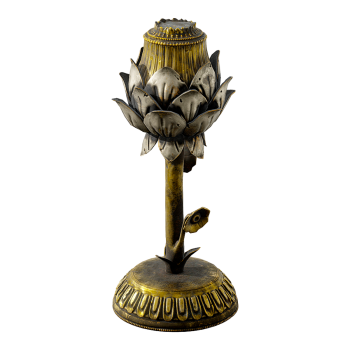
Bronze statue of LaOCon and his sons

This is an ancient Greek sculpture depicting the tragic scene of Troy temple priest Laocon and his two sons in the midst of being entangled by poisonous snakes.
Guofeng statue antique bronze lotus lamp

Guofeng statue antique bronze lotus lamp